Location
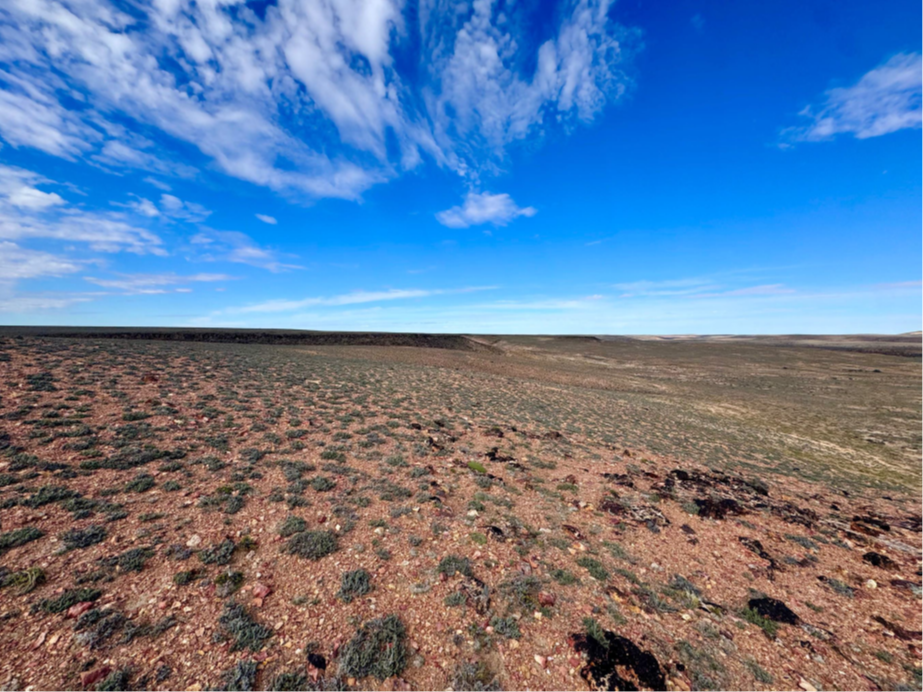
The Luna Roja Project is situated in Santa Cruz Province, Argentina, on the Northern edge of the Deseado Massif (Figure 1) and is approximately 37 km northwest of Cerrado Gold’s Las Calandrias and Don Nicolas Mines and associated infrastructure.
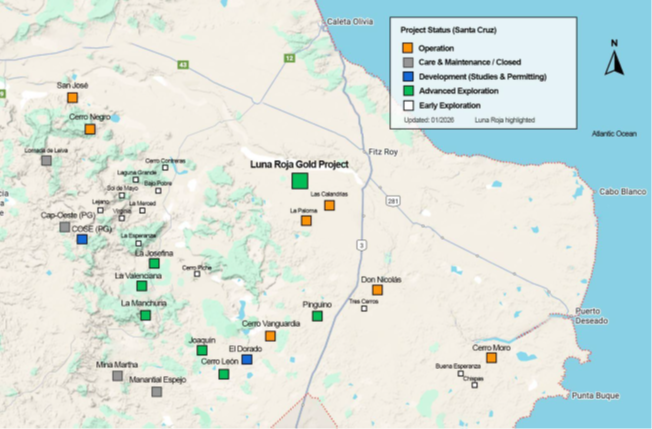
Figure 1: Magna Terra Minerals Property Map
The Project is under option to Lunex Metals per the following terms/structure:
| Term | Cash | Cash/Share | Total |
|---|---|---|---|
| Exclusivity (paid) | 75,000 | – | 75,000 |
| Upon Signing (paid) | 100,000 | – | 100,000 |
| 1st anniversary | 125,000 | 275,000 | 400,000 |
| 2nd anniversary | 125,000 | 375,000 | 500,000 |
| 3rd anniversary | 125,000 | 475,000 | 600,000 |
| 4th anniversary | 125,000 | 575,000 | 700,000 |
| Total (CAD$) | 675,000 | 1,700,000 | 2,375,000 |
Geology and History
Gold discovered by AuEx Argentina (2007). Subsequent work by Minera Andes, Mariana, and Agnico Eagle. Magna Terra initiated the first drill program in 2019.
Systematic exploration work to date includes:
- Surface Geochemistry – 360 rock and float samples; 741 trench samples; 715 soil samples.
- Ground Geophysics – 17.6 km of Induced Polarization (IP) survey over 12 E-W lines; High resolution magnetometry survey (completed 2026) – confirmed and expanded 6 priority targets.
- Historical Drilling: 8 scout drill holes totaling 1,184 meters (Magna Terra 2019)
- Current Drilling Phase 1: 3,000-meter diamond drill program near completion by Lunex Metals (assays pending).
- Phase 2 Drilling: 3,000+ meters planned for the second half of 2026, to follow up on and expand on Phase 1 results.
December 2025 Work Program highlights:
- High-grade rock results: up to 13.26 g/t Au and 1,155 g/t Ag
- Vía Láctea corridor CONFIRMED → remains the #1 drill target (drill-ready).
- New upside unlocked: magnetics outlines additional major corridors + intersection zones, opening a second “Vía Láctea–style” system window and new priority targets.
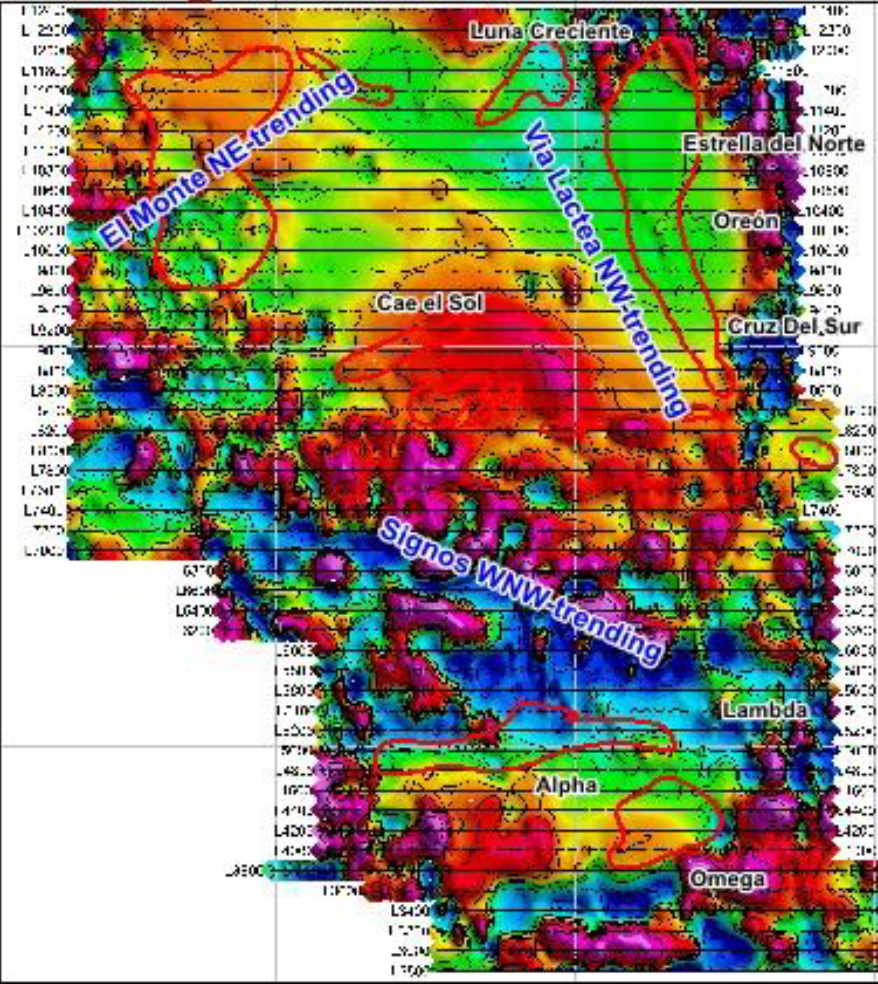 Figure 2: High Resolution Magnetometry Survey
Recent Work – Lunex Metals
- Intensive multidisciplinary campaign (3Q–2025): mapping, trenching, systematic & saw-channel sampling, geophysics
- Geological and conceptual exploration model refined
- Samples submitted for laboratory analysis
Magnetometry Update
- High-resolution survey confirmed and expanded the 6 targets
- An additional 2 high-magnetic bodies were identified, interpreted as magmatic–hydrothermal centers
Magna Terra 2019 Historical Drill / Trench results – Highlights:
- Cruz del Sur zone – Hole LR-DDH 002: 75m @ 0.62 g/t Au and 5.6 g/t Ag (from 37m) incl. 42.0 m @ 1.01 g/t Au and 4.6 g/t Ag.
- Cruz del Sur Zone – Hole LR-DDH 001: 51.4m @ 0.26 g/t Au and 9.4 g/t Ag incl. 2m @ 1.08 g/t Au and 79.6 g/t Ag
- Orion Zone – Hole LR DDH 006: 15.6m @ 0.11 g/t Au and 0.81 g/t Ag (ended in mineralization)
- Cruz del Sur Zone – Trench #2: 55m @ 0.41 g/t Au and 13,2 g/t Ag
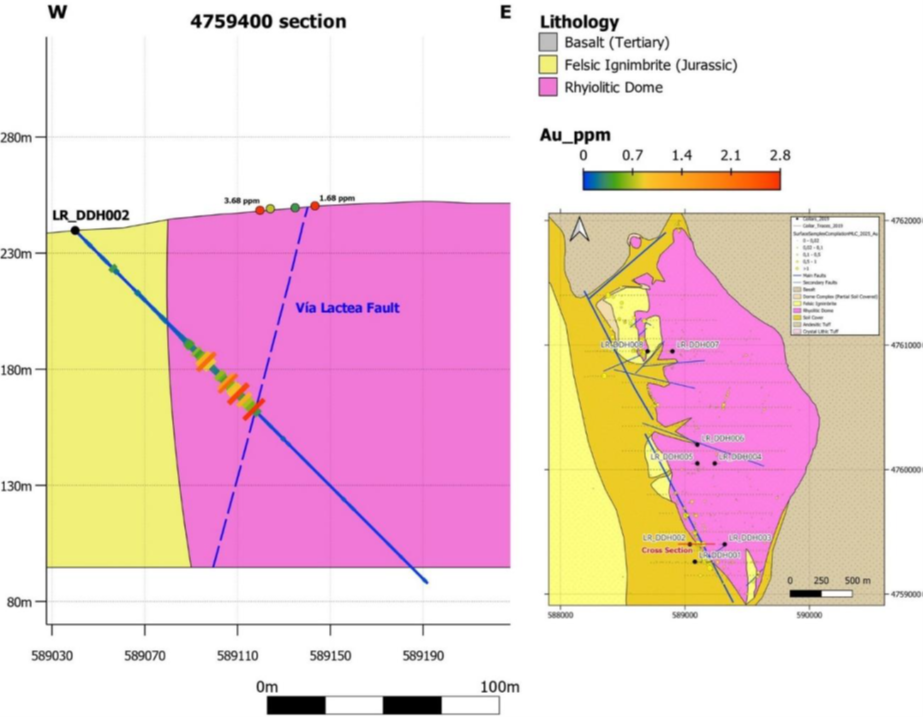
2026 Phase 1 Drilling Program Summary
Geological Rationale:
- Targeting a low-sulfidation epithermal gold system.
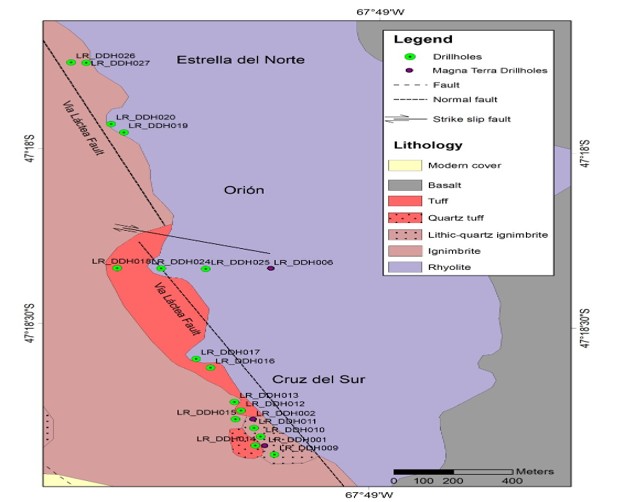
- Mineralization controlled by the Vía Láctea Fault across the Cruz del Sur, Orion, and Estrella del Norte
- Hydrothermal fluids ascended along the structure.
- Pervasive silicification, selective replacement, and disseminated sulfides developed in volcaniclastic rocks of the hanging wall.
Drilling Program
- 16 diamond drill holes (DDH).
- Total meters drilled: 2,517.5 m.
- 9 holes at Cruz del Sur, 4 at Estrella del Norte, 3 at Orion.
- Average depth: 157 m
- Completed between February and April 2026.
Observations
- Widespread mineralization hosted in replacement bodies and hydrothermal breccia zones within favorable lithologies.
- Silicification, quartz-sericite alteration and argillic alteration consistent with the model.
- Late-stage veinlets indicating acidic overprint.
- System geometry controlled by the interaction of structure, secondary permeability, and lithological receptivity.
Status